
About Us
The Origin: The Convent of Santa María de Gracia
The property where the Del Carmen Concept Hotel is located today and Chai tea It was originally part of the immense Convent of Santa María de Gracia, the first convent of Dominican nuns in Guadalajara, founded in the 16th century. During its period of greatest splendor, the convent occupied several blocks in the center of the city. With the Reform Laws of the 19th century, church property was confiscated and the convent was fragmented, giving way to private homes and public buildings. Thus, a space that for centuries was one of silence and enclosure opened up, little by little, to the civic life of the city.

Jacobo Gálvez and the Mansion on the Street that Bears His Name
On that disclaustrated land, around 1867–1870, the large house now occupied by the hotel and café was built, located at Jacobo Gálvez street #45. Its design is attributed to Jacobo Gálvez himself, the famous architect and painter from Guadalajara who created the Degollado Theater, and who, after the disclaustration of the nuns, participated in the construction and remodeling of several properties in the area. The street is named in honor of that very legacy, and there is an oral tradition—not entirely verifiable, but deeply rooted—according to which Gálvez not only designed the house, but maintained a close relationship with it while supervising his major nearby works: the dome of the Cabañas Hospice and the Degollado Theater itself.
The estate is one of the few residential houses designed by him that is still preserved in downtown Guadalajara, and it is also known as the Casa Camarena Ruiz, linked to that family; another tradition connects it to the Rulfo family as its first owners. Whatever the exact origin, it is a notable example of the civil architecture that Gálvez left in the city after the Degollado Theater.
Preserved Architectural Elements
Walking through the building, the hand of a master of neoclassicism and nineteenth-century romanticism is recognized:
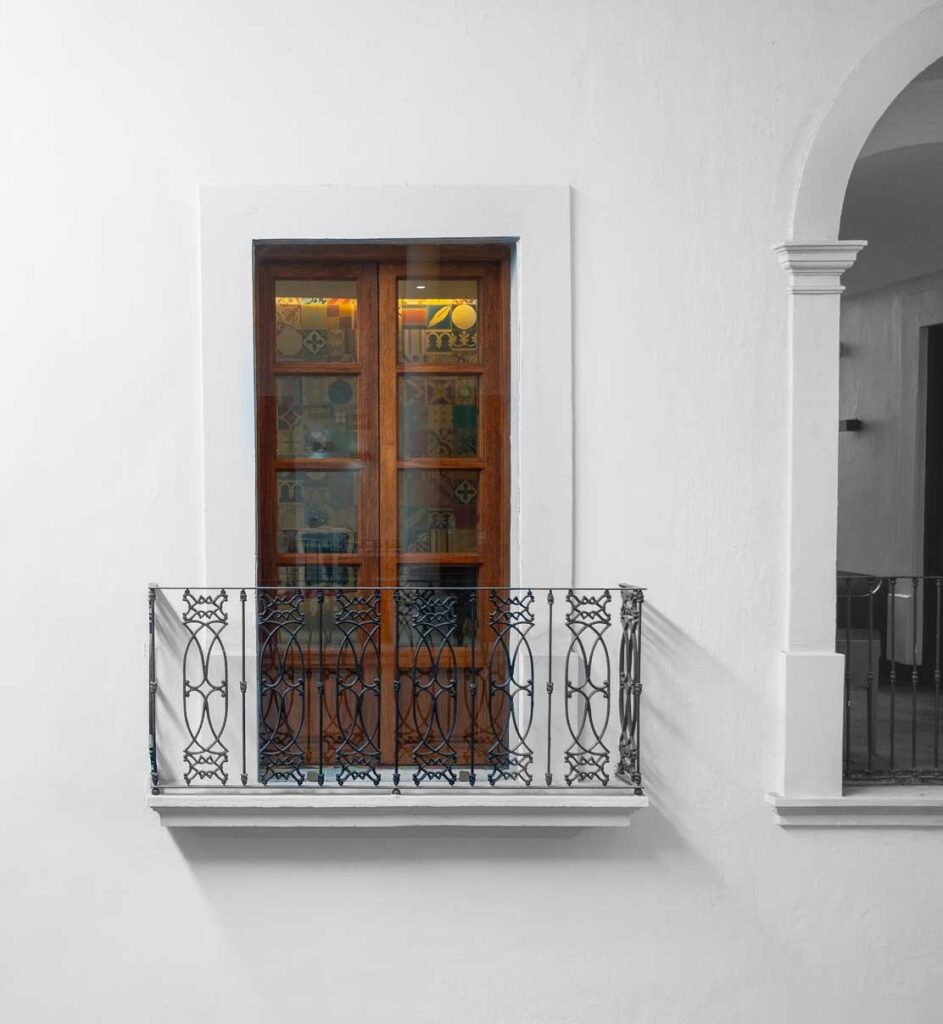
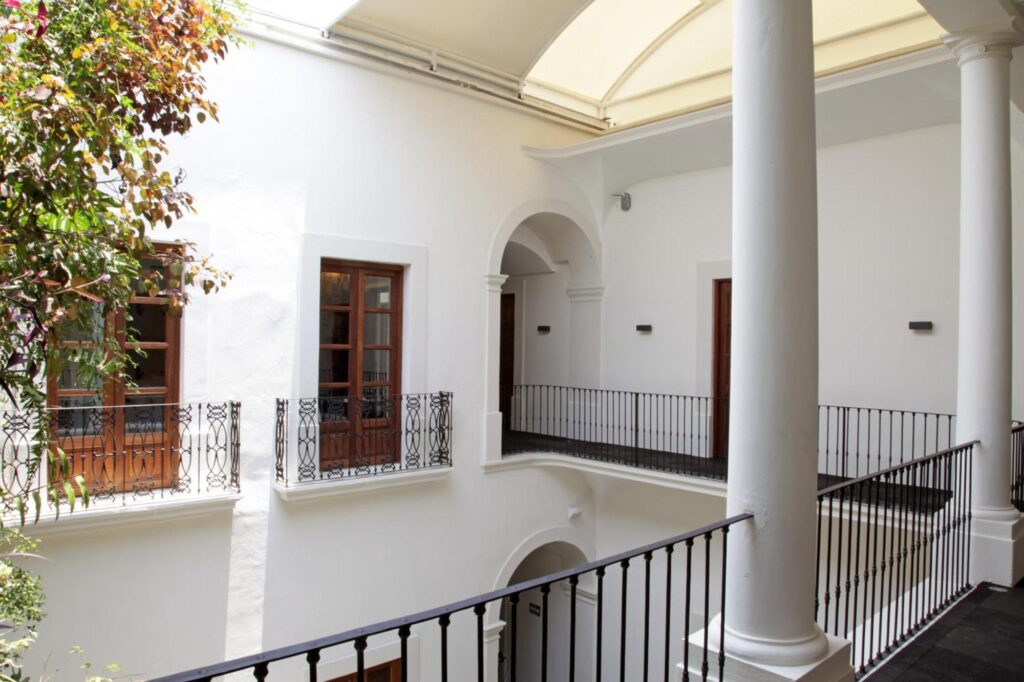
The central courtyard, which preserves the classic structure of traditional aristocratic houses from Guadalajara, with arches and a layout designed to let in light and air.
The gray and gold quarry stone, characteristic material of Gálvez's works.
The high ceilings and window frames, where the transition between the sober colonial style and 19th-century elegance can be appreciated.
From home to cafe, from cafe to hotel
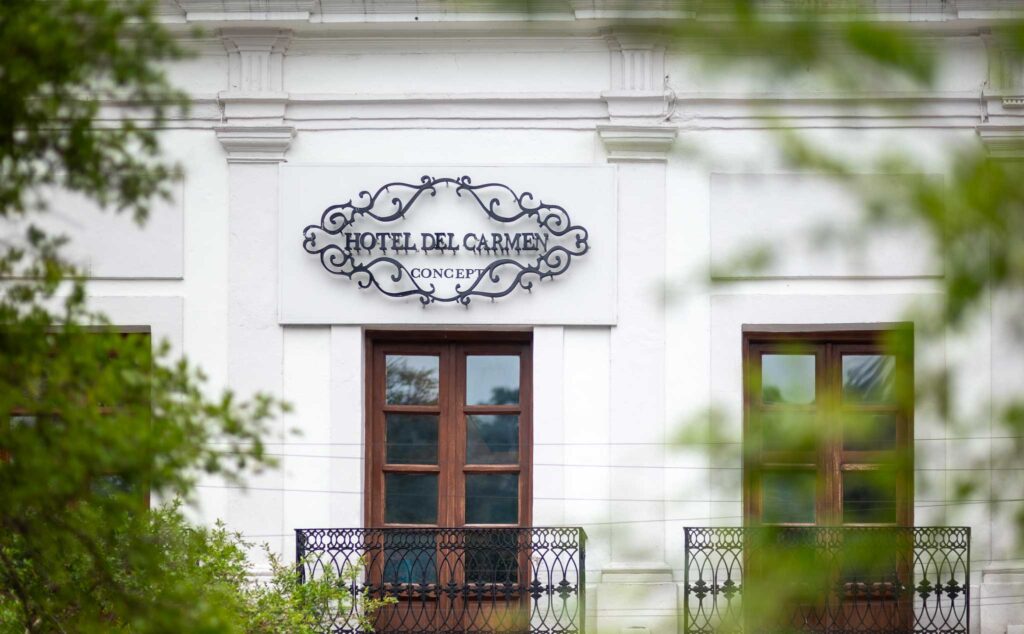
Before becoming a coffee shop, the house had various uses—offices, businesses—but it always retained its original structure. The arrival of Chai helped restore the space and open it to the public, allowing people to appreciate the interior of a house that otherwise would remain closed behind private walls. Today, the café occupies the ground floor and the central courtyard, while the Del Carmen Concept Hotel—operating under the «Concept Hotel by Chai» brand—is distributed across the upper levels, preserving the structure that Gálvez conceived over a century and a half ago.
Jacobo Gálvez Street is also one of the narrowest and most picturesque in the historic center, which helps preserve the atmosphere of old Guadalajara that the architect himself helped build. A few steps from there, inside the Degollado Theater, its most famous fresco can be seen: the representation of the Fourth Canto of Dante's Divine Comedy, painted on the theater's dome.
The bridge between two centuries: from academia to the Rupture
Although Jacobo Gálvez died in 1882 and the Generación de la Ruptura did not emerge until the 1950s, the Del Carmen Concept Hotel serves as a meeting point between both moments. The hotel's owners decided that a house designed by an academic and classical architect like Gálvez would be, precisely, the canvas to pay homage to the artists who broke with that very same academic tradition and with nationalist muralism.
Thus, the hotel themes its suites with the names of key figures of the Mexican Break and Surrealism —Remedios Varo, Leonora Carrington, Rufino Tamayo, José Luis Cuevas, among others —, creating a deliberate contrast:
Jacobo Gálvez
(19th century)
Style
Neoclassical, order, symmetry, academic rigor
Hotel presence
Stone walls, round arches, high ceilings
Philosophy
Building the identity of a young nation (post-Reform Mexico)
Rupture Generation
(20th century)
Style
Abstract, subjective, emotional, rebellious
Hotel presence
Paintings, suite names, bohemian and surrealist atmosphere
Philosophy
Assert the individual freedom of the artist against the State
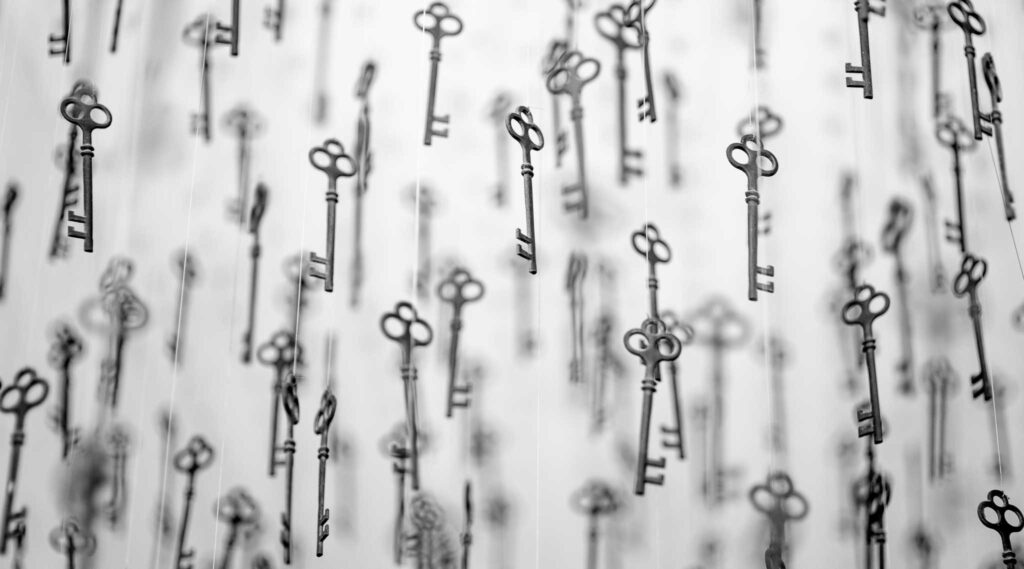
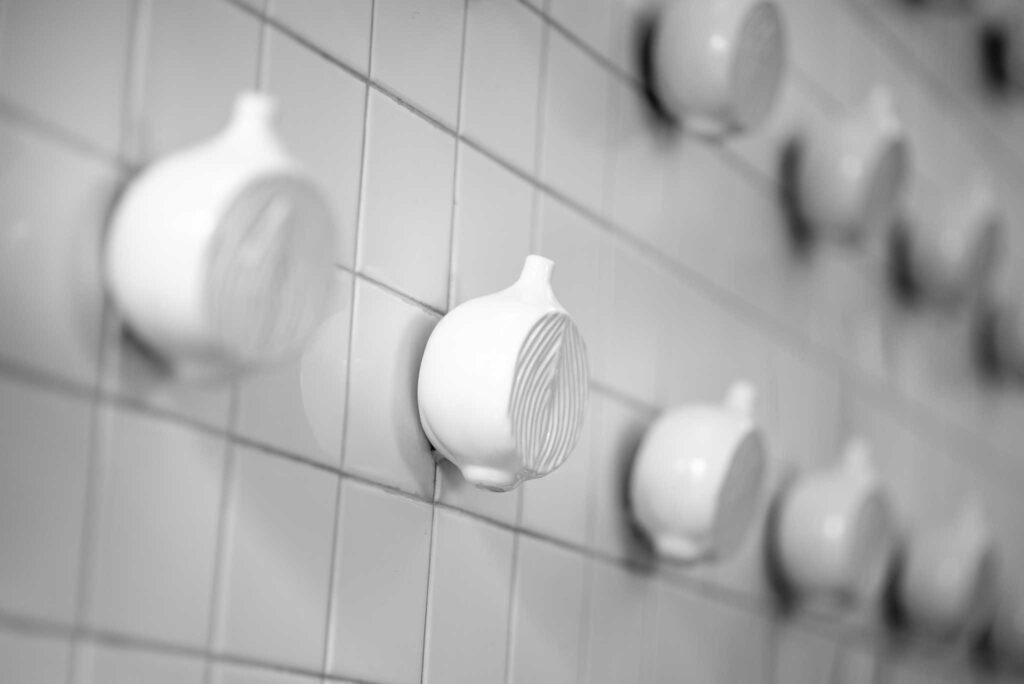
In both cases they are, in their own way, movements of openness: Gálvez broke with the colonial Baroque to bring in European Neoclassicism; the Ruptura broke with nationalist muralism to bring in an art of universal vocation. The result is a building where the rigorous order of the 19th century and the creative freedom of the 20th century coexist, converse, and contrast in every hallway: the round arches and gray quarried stone act as a sober frame that, inside the rooms, is broken by the iconography of artists who precisely despised the academic realism that Gálvez represented so well.
Current Period
Our Current Hotel and Team
Who
The Soul Behind the Shelter
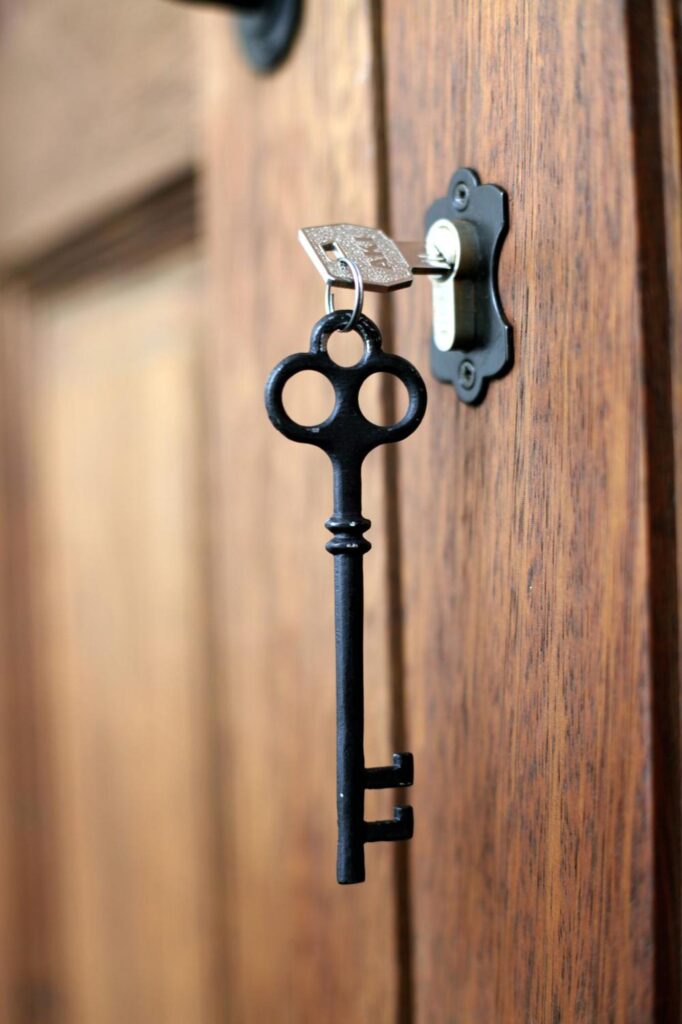
We are a collective of experience facilitators. The team is not limited to managing a property; we act as guardians of a legacy and cultural mediators. We are defined by a human-centric philosophy: we are people taking care of people. Our work is to create an atmosphere of warmth and personalized attention, ensuring that every technical detail is impeccable so that the human team can focus on what matters most: pampering those who visit us.
Why
The Purpose of Existing
The hotel exists to be an oasis of intention in the heart of the city. We seek to unite the art of the Generación de la Ruptura with a hospitality that celebrates history. Our raison d'être is to offer a space where, despite the external dynamism, the guest finds a sanctuary of design and comfort. It is the union of aesthetic avant-garde with respect for Guadalajara's past.
What
A Transformation Offer
Our proposal combines the best of the physical and digital worlds:
- Narrative Stays: Rooms inspired by great artists that invite a unique visual immersion.
- Gastronomic Collaboration: Although the restaurant is an independent entity from the hotel, we maintain a close partnership to delight our guests. This independence allows us to specialize in relaxation, while the restaurant focuses on culinary excellence.
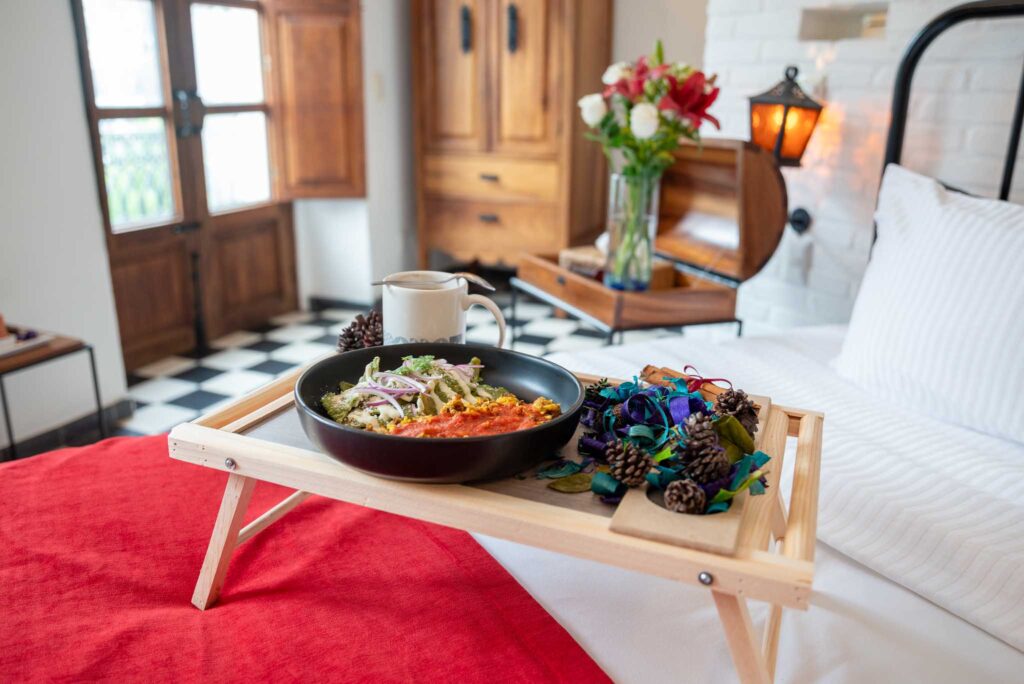
- White Glove Service: Guests enjoy the exclusivity of having restaurant dishes delivered directly to their room, blending business independence with absolute comfort.
- Digital Efficiency: Technologically optimized processes for a seamless and hassle-free stay.
Where
The Pulse of the Historic Center
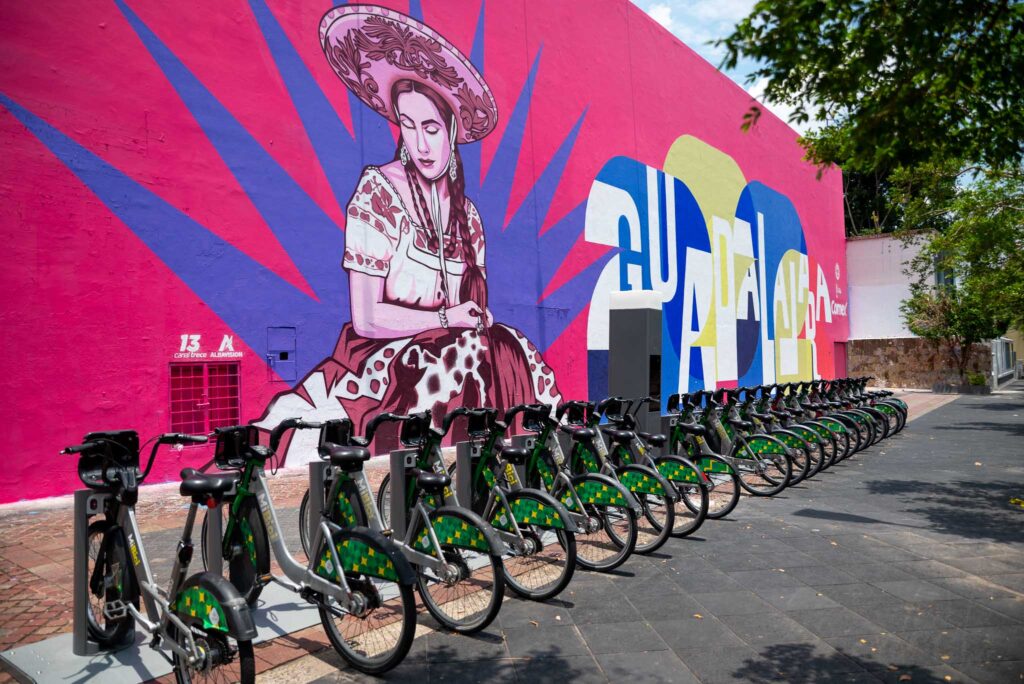
We are located at the vital epicenter of Guadalajara, next to the Ex-Convent of El Carmen. Being a downtown hotel means inhabiting the place where history happens, surrounded by culture, museums, and vibrant Tapatio life. We envision ourselves as a living cultural hub that drives experience, connection, integration, learning, entertainment, fun, and the joy of living.
When
The Timelessness of the Guest
We adapt to the traveler's pace. Whether you are visiting Guadalajara for the energy of its festivals or seeking a weekend retreat, the hotel transforms to be whatever you need. Our neoclassical architecture maintains a natural coolness in the summer and a cozy warmth in the winter, offering an experience that transcends the seasons and focuses on the well-being of the present moment.
The Art of Leaving a Mark
(and Some or Other Story)
José Luis Cuevas (1934–2017): The Leader of the Rupture
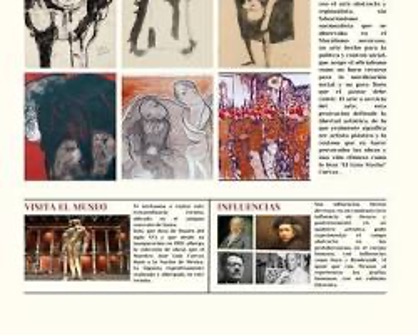
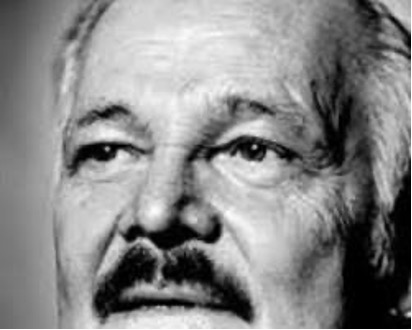
Known as the «enfant terrible» of Mexican art, Cuevas was the public face and strategist of the Generación de la Ruptura. If Gálvez represented order and academia, Cuevas was raw drawing and rebellion.
- His art: master draughtsman, focused on the degraded human condition —deformed figures, prostitutes, madmen, beggars, butchers—, with a nervous line and ink blots that explored the ugly and the grotesque.
- The «Nopal Curtain»: term he coined in 1956 to criticize the muralism of Rivera and Siqueiros, which he accused of locking Mexico behind a barrier of nationalism instead of opening it up to universal art.
- The «Ephemeral Mural» (1967): In the heart of Mexico City's Zona Rosa, Cuevas rented a billboard, painted a mural, and announced that it would be destroyed, as a direct slap in the face to the muralist idea of eternal and monumental art. The event is considered one of the first happenings in Mexican art.
- The daily self-portrait: For decades he photographed or drew himself every day, documenting his own aging; he used to say that his best work was himself.
- The «Mafia»: That was the ironic name given to the Ruptura group—which also included Manuel Felguérez, Vicente Rojo, and Alberto Gironella, among others—of which Cuevas was the most belligerent voice against the old muralist guard.
- La Castañeda Insane Asylum: I spent hours there drawing the patients, searching for human truth in the margins of society, far from academic perfection.
Unlike the abstract artists of the group, Cuevas never abandoned the human figure: he «broke» it from within, deforming it to show pain and existence.
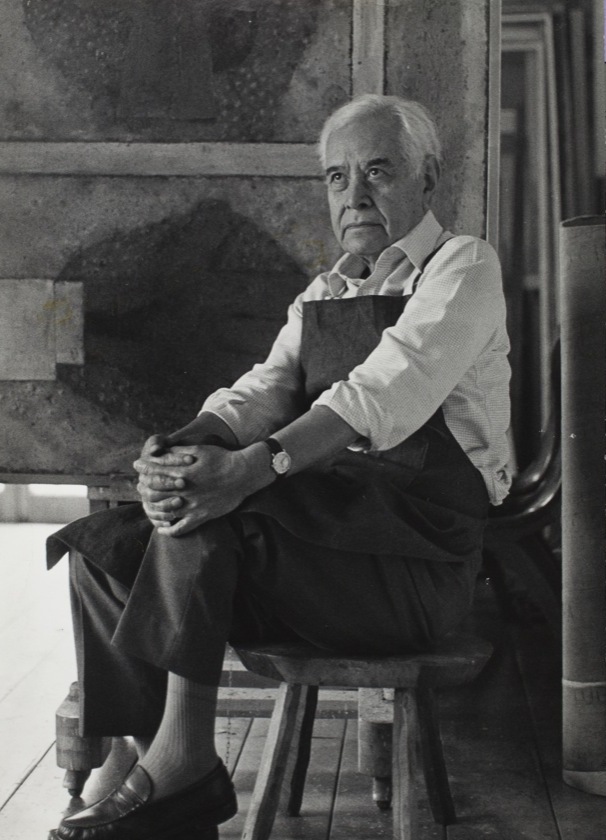
Rufino Tamayo:
The spiritual father of the Rupture
He was the first to move away from political muralism to concentrate on color, texture, and a universal worldview, demonstrating that Mexican art could be universal while still remaining Mexican. Tamayo opened the door that Cuevas would later cross with greater stridency.
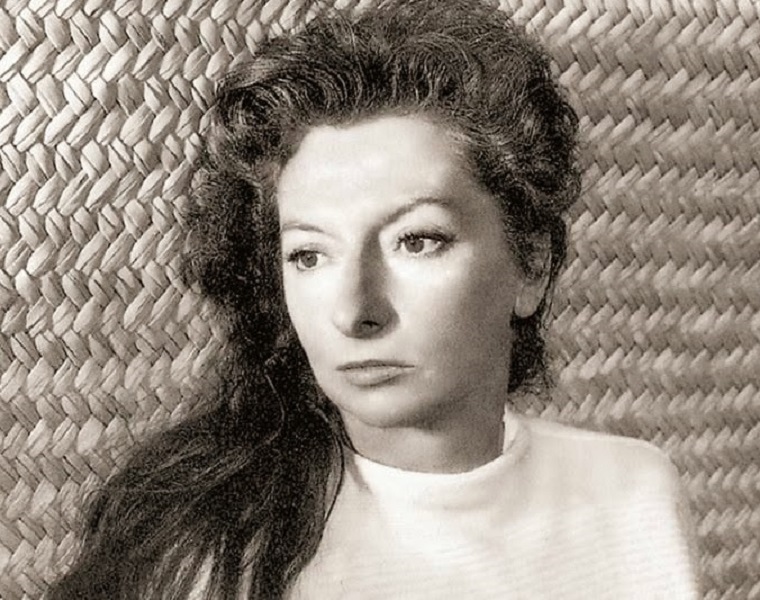
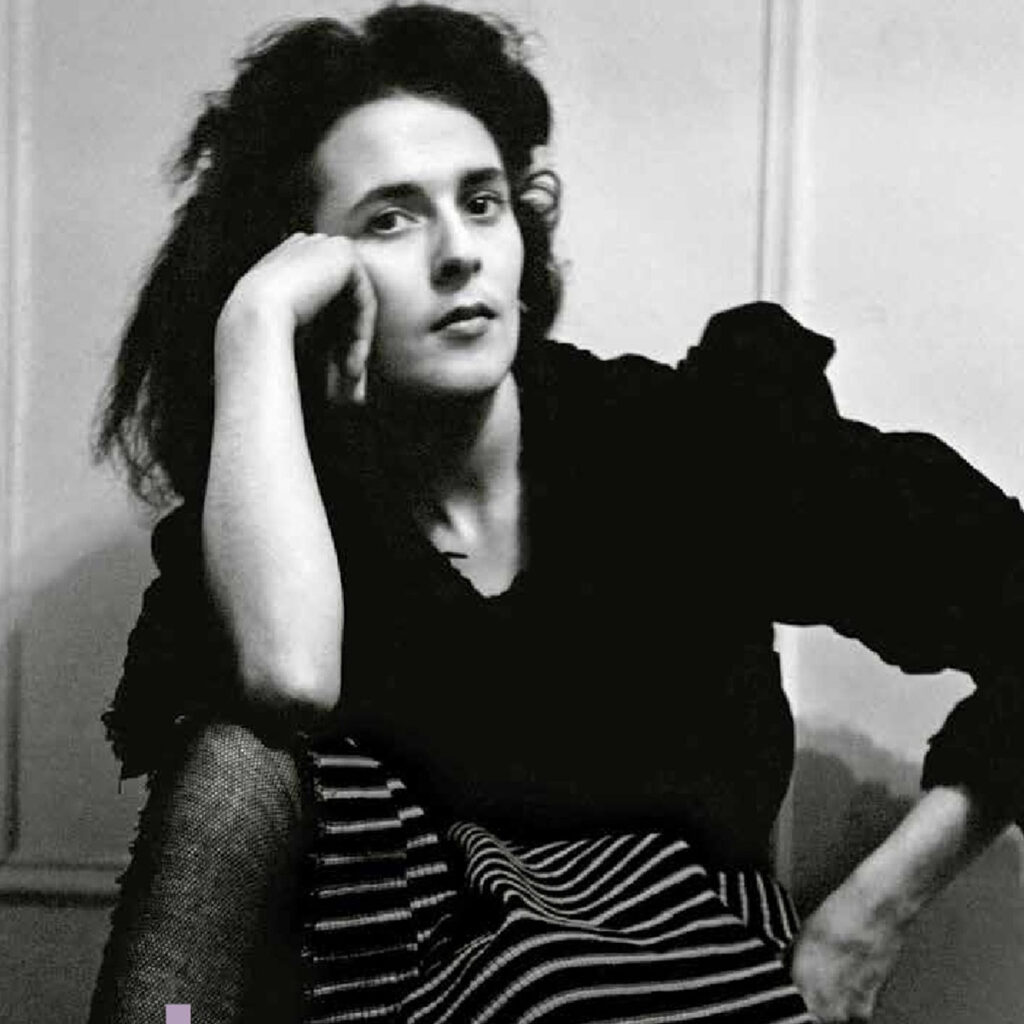
Remedios Varo and Leonora Carrington: The "witches" of surrealism
Although technically belonging to European surrealism based in Mexico and not to the Rupture in the strict sense, their presence is essential: they contributed the oneiric, magic, esotericism, and psychoanalysis, breaking the rational order represented by Gálvez's architecture.
They lived a few streets apart in the Colonia Roma neighborhood of Mexico City and visited each other almost daily. For them, cooking was a form of alchemy and social experiment:
- They served dishes with unusual ingredients—locks of hair mixed into the rice, tortillas stuffed with cotton and fabric—to observe their guests' reactions.
- They would choose names at random from the phone book and invite them to dinner, acting as if they had known them all their lives.
- Remedios Varo, who had a scientific background, labeled jars of common spices with names like «stardust» or «cobra venom,» and cooked in front of her guests while enjoying their nervousness.
- They shared automatic writing notebooks and word games that fed the symbology of their paintings.
For them, humor was a way of coping with the reality of exile, and the everyday had to be «profaned» to find the creative spark: hence the machines that grind stars or the characters that feed the caged moon in their paintings.
Gunther Gerzso and Vlady: The Order of Abstraction
In contrast to the chaotic lines of Cuevas, Gerzso and Vlady brought an order different from that of Gálvez: not the neoclassical order, but that of emotional geometry and sacred space.
- Gerzso, hailing from the world of film set design, was a close friend of Varo and Carrington; his style of «psychological landscapes»—overlapping, sharp, and precise planes of color—was born from that shared introspection. His painting *Los días de la calle Gabino Barreda* (1944) abstractly portrays the group of exiled friends, including Varo and Benjamin Péret, as a sort of group photograph made of planes and color.
- Vlady, of Russian origin, worked with light and the glazing technique to address psychological themes within a socially tinged expressionism.
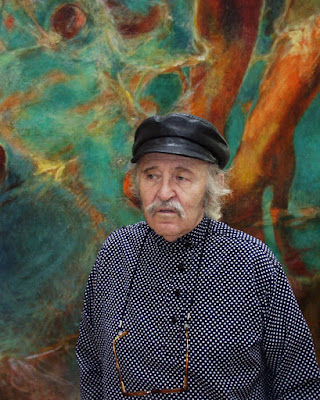

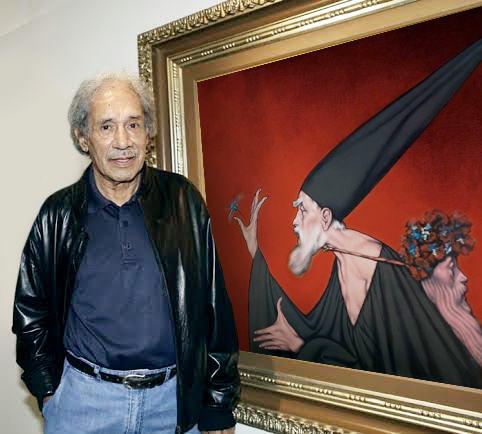
Juan Soriano and the Coronel brothers
- Juan Soriano transitioned from classical portraiture to monumental and abstract sculpture —famous for his birds—, and was known for his sharp tongue and his ability to move among all groups without strictly belonging to any.
- Pedro Coronel was the colorist par excellence, blending abstraction with pre-Hispanic motifs.
- Rafael Coronel, brother of Pedro, leaned toward the figurative and theatrical: melancholic faces, monks, and characters with an air of dark magical realism. He married Ruth Rivera Marín, daughter of Diego Rivera, thus ironically remaining connected to the lineage of muralism despite his own style gravitating toward the fantastic and gloomy, in tune with the spirit of Varo and Carrington.
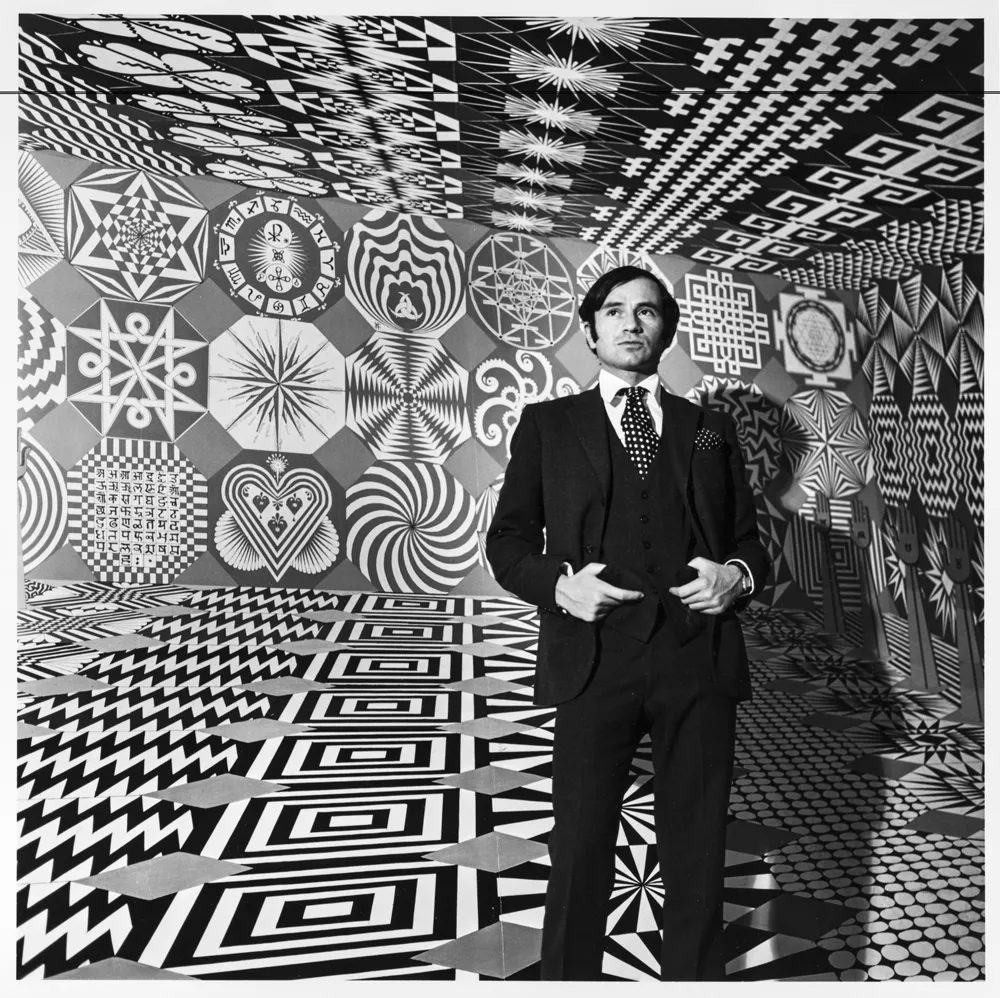
Pedro Friedeberg: The Iconoclast
A pupil of Mathias Goeritz, Friedeberg created a style of his own described as «psychedelic-kitsch art nouveau»—famous for his hand-shaped chair—bringing humor, irony, and playful design to the group. If Cuevas challenged with the grotesque, Friedeberg did so with the absurd and the decorative taken to the extreme.

Jacobo Gálvez: The Architect
Guadalajaran architect and painter, creator of the Degollado Theater and the dome of the Cabañas Hospice, Gálvez represents the neoclassical order and academic rigor of 19th-century Mexico. He is responsible—according to the most widely accepted attribution—for the design of the historic mansion that now houses the hotel, and his obsession with the management of natural light, visible in the dome of the Degollado Theater, is also recognized in the building's central courtyard.
What brings them all together?
- Freedom of topics: Unlike the muralists, who painted the Revolution and the worker, this group explored the unconscious, dreams, and geometry.
- Exile and cultural mixing: Several were foreigners who adopted Mexico—Varo, Carrington, and Gerzso of European origin, Vlady Russian—, bridging the gap between European avant-gardes and the Mexican light.
- The Rupture as an attitude: almost all of them, except for the surrealists with their own universe, shared the idea that art did not have to be political to be Mexican.
Together, they did not share a common style, but they did share the same enmity—mandatory artistic nationalism—and the same love: creative freedom. The Del Carmen Concept Hotel brings together these diverse voices within the classical structure of Jacobo Gálvez, achieving a space where the order of the neoclassical past and the chaos of modernity coexist in every corner.